

We power the Edge and the Datacenter. From distributed retail locations to centralized compute, we build infrastructure that just works.
Edge Solution
TEKKIO
TEKKIO
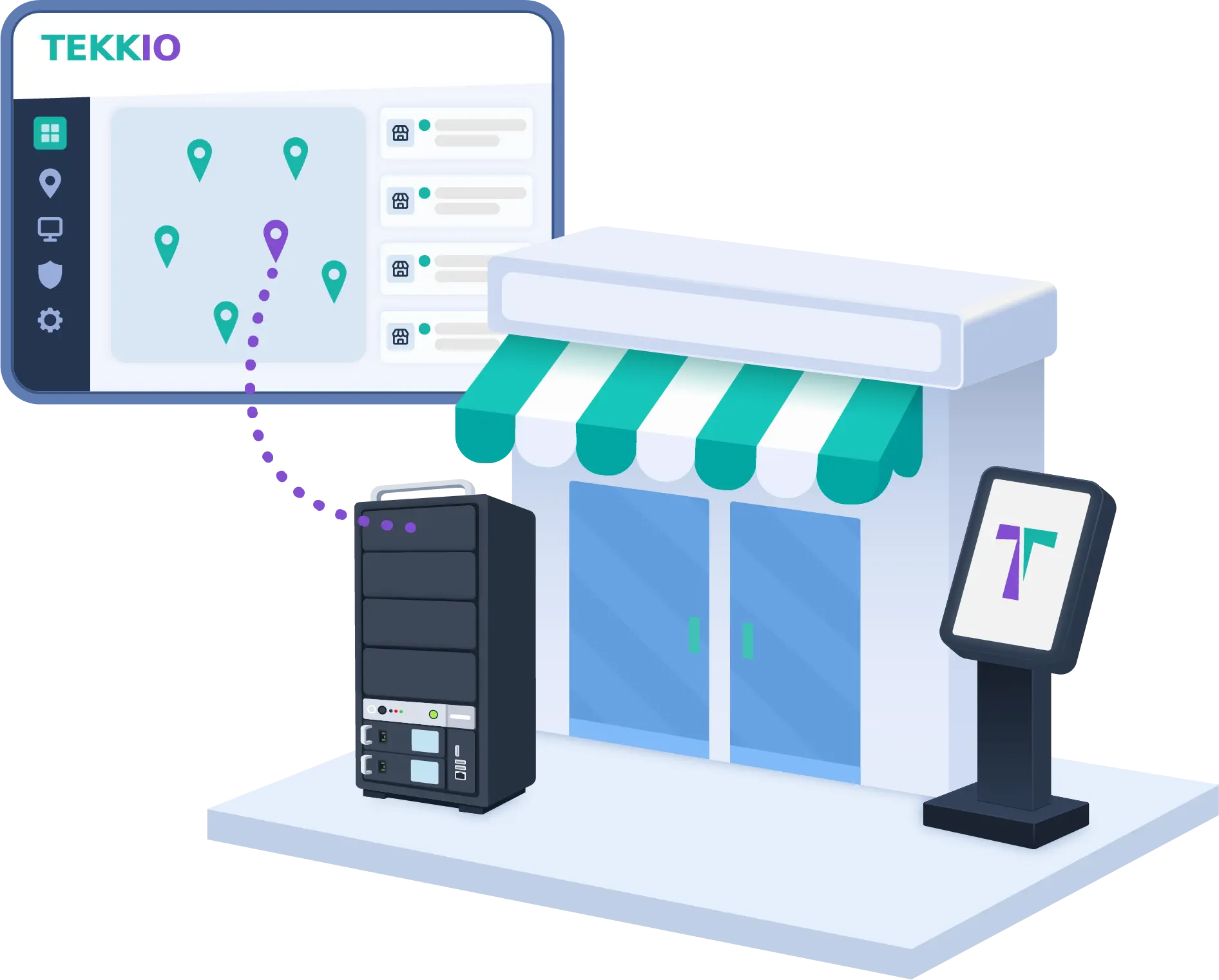
Tekkio is designed to simplify infrastructure management across distributed edge environments. It enables teams to deploy, monitor, and manage virtual machines and containers from a centralized control plane focused on scale and operational efficiency.
At the core of each cluster lie the software-defined networking layer TekkioMesh and the distributed storage layer TekkioFS. Additionally, Tekkio includes TekkioKiosk to deploy and manage display and order-entry kiosks, TekkioDesktop as a small-scale VDI-like alternative to deploying desktop computers, and many more features — all included in the per-cluster license.
Provisioning Tool
AnchorPT
AnchorPT
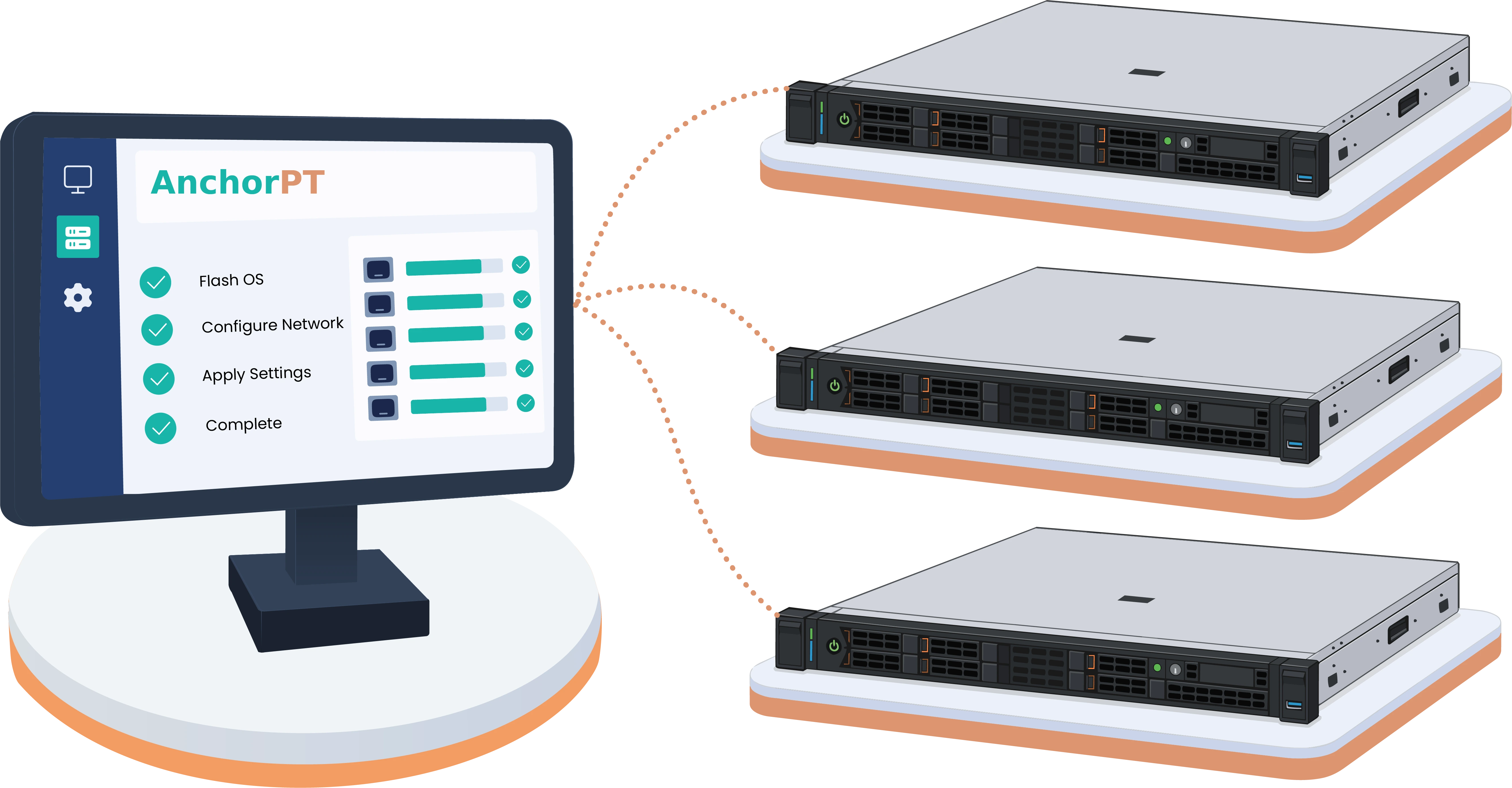
AnchorPT is designed to simplify large-scale system provisioning across enterprise and lab environments. It enables teams to automate hardware-level staging, base operating system deployment, and hypervisor installation from a unified workflow focused on operational speed and eliminating configuration drift.
At the core of the platform is an intelligent automation layer featuring automatic network discovery, which seamlessly detects new hardware and matches it to ongoing provisioning jobs while tracking assets via purchase orders.
Operating System
AnchorLinux
AnchorLinux
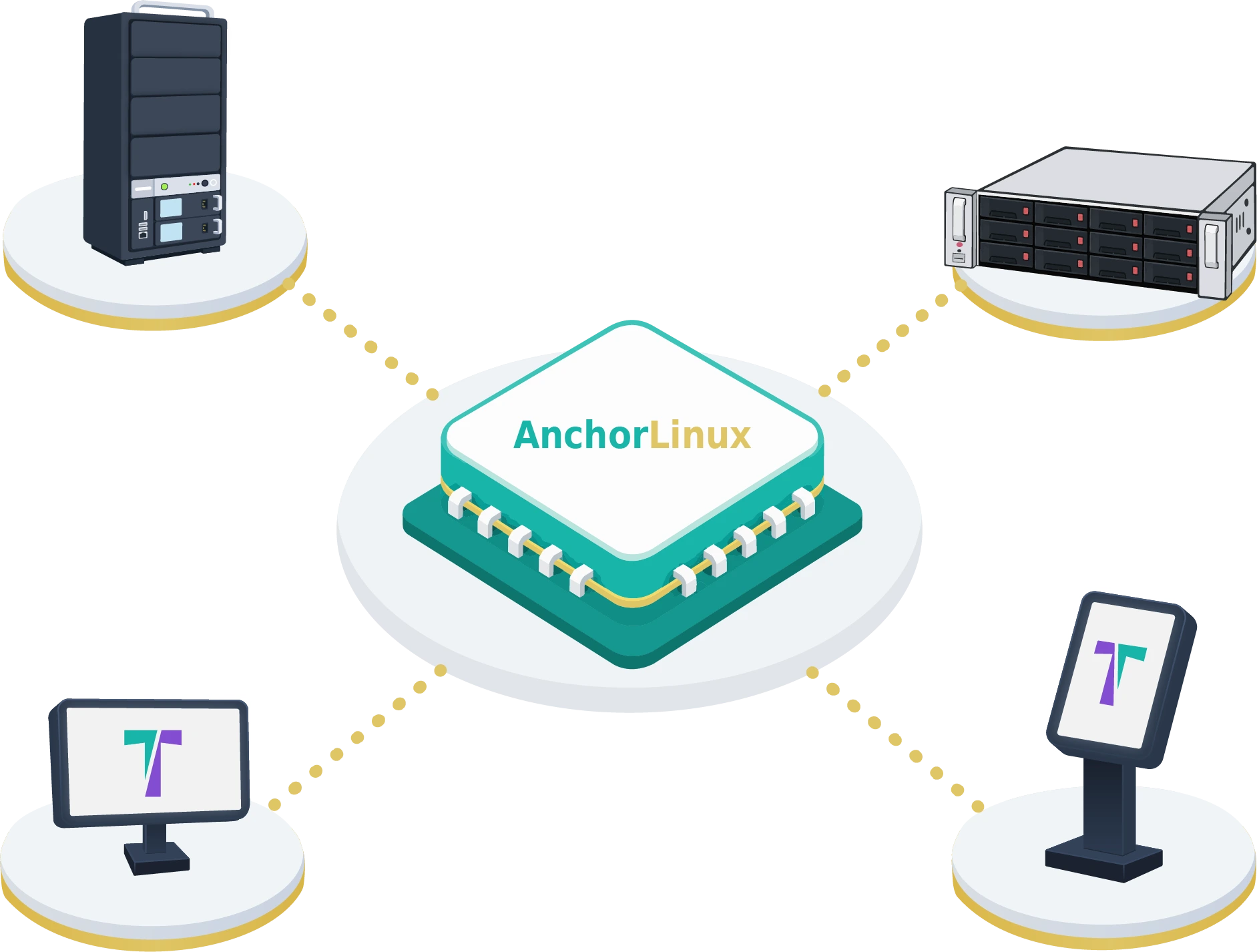
AnchorLinux is a build, boot, and package composition system ideal for appliance-style devices. Rather than a bulky, general-purpose distribution, it provides a highly focused framework designed for single-purpose hardware.
This makes it an ideal, predictable foundation not just for datacenter infrastructure, but for a broad range of dedicated roles including kiosks, thin-clients, and edge appliances. Users can precisely define the product and device hardware configuration, including specific network and storage layouts, while selecting only the exact software packages required. The result is a minimal, immutable image tailored perfectly to the device's fixed operational role.
Bridging theinfrastructure gaps
Enterprise infrastructure often means picking one platform and routing everything through it whether or not it actually fits the job.That approach doesn't hold up anymore, both financially and operationally. Kalastack starts from a different idea: infrastructure should be shaped around the problem you are actually trying to solve, not forced into a platform built to handle everything at once.
Targeted solutions
We build for specific environments and specific problems, not everyone at once.
Built from real problems
Our platforms are shaped by actual problems IT teams face, not hypothetical ones.
Making infrastructure simpler
Doing fewer things really well, cutting out complexity that doesn't need to be there.
Targeted solutions
We build for specific environments and specific problems, not everyone at once.
Built from real problems
Our platforms are shaped by actual problems IT teams face, not hypothetical ones.
Making infrastructure simpler
Doing fewer things really well, cutting out complexity that doesn't need to be there.
Built with restraint
We've spent decades in software architecture and enterprise IT, and that experience taught us the best infrastructure is infrastructure you stop thinking about. We hold ourselves to a standard of writing with the least amount of code necessary to solve a problem. Less code means fewer places for things to break, fewer things to maintain, and fewer 2am alerts to the teams running it.
The people behind it
Our team has spent years in the trenches of enterprise IT, the kind of experience that teaches you which problems are worth solving and which ones are just noise. We've managed the environments our customers manage, inherited the systems they've inherited, and felt the same operational friction they deal with today. That perspective shapes every decision we make.
We believe good infrastructure comes from teams that stay close to the work. We value clear thinking over clever solutions, collaboration over hierarchy, and a healthy skepticism toward complexity that hasn't earned its place. When we build something, we build it the way we'd want to inherit it.
"Infrastructure should fit the problem.Not the other way around."